
There's nothing more stunning than a long-haired dog with a flowing, healthy, tangle-free coat. However, one thing is certain: that gorgeous coat doesn't maintain itself.
The difference between a nice-looking coat and one with mats usually comes down to one thing: regular grooming at home.
With the right tools and products, grooming your long-haired dog at home can be a fun way to bond. It's something you both can enjoy together.
This guide will walk you through everything you need to know with expert tips built in every step of the way.
Why Long-Haired Dogs Require Special Grooming Attention
Long coats are beautiful, but they come with unique challenges that short-haired breeds simply don't face. Here's why staying on top of your long-haired dog's grooming routine matters so much:
Matting is a real health risk.
When long fur gets tangled, it forms tight mats. These mats can pull on the skin, limit blood flow, trap moisture, and allow germs and parasites to grow. This can lead to painful skin problems.
Long coats trap debris. Dirt, leaves, burrs, pollen, and even fecal matter can get caught in a long coat.
Shedding is amplified. Many long-haired breeds, especially double-coated ones like Collies and Golden Retrievers, shed heavily. Without regular brushing and deshedding, loose fur mats into the undercoat.
Skin health depends on coat health. A clean, well-maintained coat allows air to circulate to the skin. Neglected coats can trap heat and moisture, contributing to hot spots, fungal issues, and skin irritation.
Best Brushes For Long-Haired Dogs
Before diving into technique, let's talk tools. Having the right equipment makes grooming long-haired dogs at home dramatically easier and more effective.
Slicker Brush: Your everyday workhorse. A slicker brush with fine wire bristles reaches through the outer coat to gently remove tangles, loose hair, and debris without damaging the fur.
Wide-Tooth Comb: Essential for working through tangles and checking that you've brushed all the way down to the skin. If a comb can run through the coat smoothly from root to tip, you're mat-free.
Dematting Comb or Splitter: Specifically designed to carefully break apart mats without cutting the coat. A must-have for dogs prone to heavy tangling behind the ears, under the legs, and around the collar.
Undercoat Rake: For double-coated long-haired breeds, an undercoat rake removes dead undercoat fur that would otherwise pack down and mat.
Pin Brush: Great for finishing longer, silkier coats (think Maltese or Yorkshire Terrier). Leaves the coat smooth and polished after brushing.
Professional Grooming Shears: For trimming around the paws, face, and sanitary areas. Blunt-tipped scissors are safer for home use.
High-Velocity Dryer (optional): If you bathe at home regularly, a force dryer significantly speeds up drying and helps blow out loose undercoat at the same time.
How Often Should You Groom a Long-Haired Dog?
Daily brushing is essential for dogs with very long, fine, or silky coats, such as the Maltese, Shih Tzu, Yorkshire Terrier, and Afghan Hound. These breeds have single-layer coats that tangle quickly, and even a day or two without brushing can lead to matting.
Most long-haired dogs with thick or double coats need grooming 3 to 4 times a week. Examples include Golden Retrievers, Cocker Spaniels, Bernese Mountain Dogs, Rough Collies, and Shetland Sheepdogs.
These dog breeds have thick undercoats. They need an undercoat rake and a slicker brush, especially when they shed. This helps to keep loose fur from getting tangled in the undercoat.
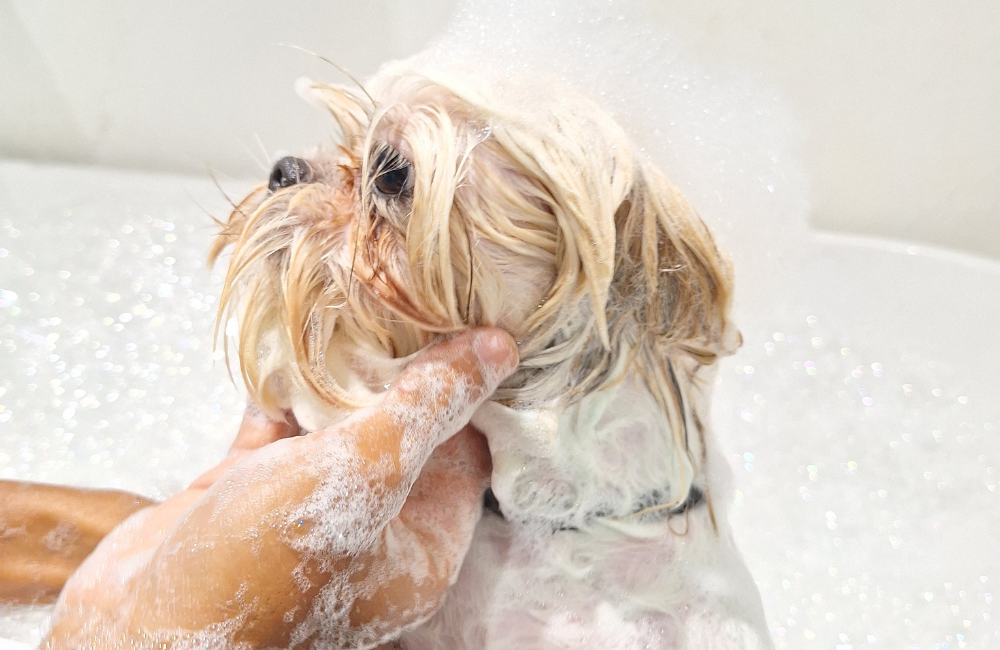
Bathing every 4 - 6 weeks keeps most long-haired dogs clean without stripping the coat of its natural oils. Dogs that spend significant time outdoors or have skin conditions may benefit from more frequent baths.
When you bathe, it's important to use a moisturizing, soap-free shampoo if your pet has a long coat. Harsh shampoos can make the fur dry and weak, which leads to tangles.
PRO TIP: Never skip brushing before a bath. Bathing a matted coat causes mats to tighten and become nearly impossible to remove. Always brush thoroughly before getting your dog wet.
Step-by-Step: How To Groom A Long-Haired Dog
Step 1: Start with a Detangling Spray: Before you pick up a brush, lightly mist the coat with a quality detangling or conditioning spray. Brushing a completely dry coat can cause breakage and static, especially in fine or silky-coated breeds. A detangling spray adds just enough slip to make the brush glide through without pulling. earthbath's 3-in-1 Deodorizing Spray is a great option here - it conditions, deodorizes, and detangles in one step.
Step 2: Section the Coat: Don't just run a brush over the surface. Work in sections, parting the coat and brushing in layers from the skin outward.
This is called "line brushing." It is the only way to ensure you reach the skin, where mats form.
Go through each section with your slicker brush, using gentle, short strokes. Pay extra attention to high-friction areas where mats are most likely to form:
- Behind the ears
- Under the collar
- Around the armpits and groin
- Around the base of the tail
- Between the hind legs
Step 3: Follow Up with a Wide-Tooth Comb: After brushing, run a wide-tooth comb through every section. If the comb catches or drags, there's still a tangle present. Address it gently before moving on.
Step 4: Address Mats Carefully: If you encounter a mat, never pull straight through it since this is painful and can damage the coat.
Instead, hold the bottom of the mat close to the skin. This helps ease tension. Use your fingers or a dematting comb to gently separate the outer edges. Work your way in slowly.
A little detangling spray here goes a long way. If a mat is too tight to safely remove at home, see your groomer.
Step 5: Use a Pin Brush or Boar Bristle Brush: Finish by using a pin brush or a natural bristle brush. This helps spread the coat's natural oils. It makes the coat look smooth, shiny, and nice.
Long-Haired Dog Grooming Tips & Tricks
Always brush before you bathe. Water makes tangles get tighter. A thorough brush-out before bath time saves you a lot of frustration afterward.
Again, work in sections. Don't just pour shampoo on top of a long coat. Work it through in sections, massaging all the way down to the skin. Dense coats can trap product near the surface if you're not thorough, leaving residue that causes itching and dullness.
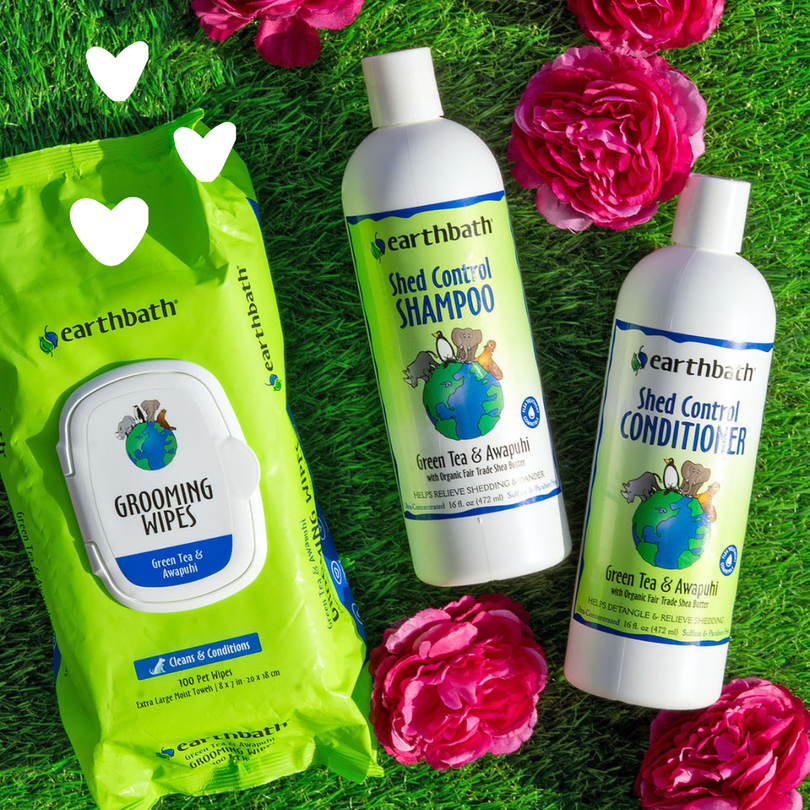
Choose a moisturizing, soap-free shampoo. For long coats, shampoo formulation really matters. Harsh formulas strip the coat's natural oils, leaving it dry, brittle, and more prone to future matting. Look for a pH-balanced, gentle formula, like earthbath Oatmeal & Aloe Shampoo, that cleanses thoroughly while keeping the coat soft and manageable.
Rinse until the water runs clear. Shampoo residue is one of the most common causes of skin irritation and dull, sticky fur in long-coated dogs.
Conditioner is non-negotiable. For long-haired dogs, conditioner is just as important as shampoo. It restores moisture, smooths the hair cuticle, reduces static, and makes the coat dramatically easier to brush out. Apply, let it sit for a few minutes, and rinse well.
Press-dry, don't rub. Rubbing a long coat with a towel creates tangles and breakage.
Instead, press towels on the coat to soak up moisture. Then, use a blow dryer on a low or cool setting to keep the coat from tangling as it dries.
Final Thoughts: The Reward Is Worth the Effort
Grooming a long-haired dog takes more time and commitment than caring for a short-coated breed but the reward is immense.
A clean long coat is a beautiful sight in the dog world. More importantly, a well-groomed dog is comfortable, healthy, and happy.